
The Glasgow City Child and Youth Health Improvement Team works across the North East, North West and South localities to improve the health and wellbeing of children, young people and their families. Our team delivers evidence‑based programmes, resources and works in collaboration with a range of partners across the city to support prevention and early intervention approaches to health improvement.
Our work is guided by Glasgow City HSCP Health Improvement Strategic Direction 2023 to 2028 which outlines key health priorities for health improvement in Glasgow.
This web page hosts a range of helpful information and resources from the Health Improvement Team. This page works alongside our HWB Website which aims to streamline our communication, share quality assured materials and create a consistent health and wellbeing offer to professional supporting children and young people in Glasgow.
Resources and Toolkits
Children and Young People Mental Health Support Guide – Glasgow City: This is a guide to support statutory and third sector professionals to refer children and young people to mental health and wellbeing supports and services that are appropriate to their needs and that can be accessed relatively quickly and easily.
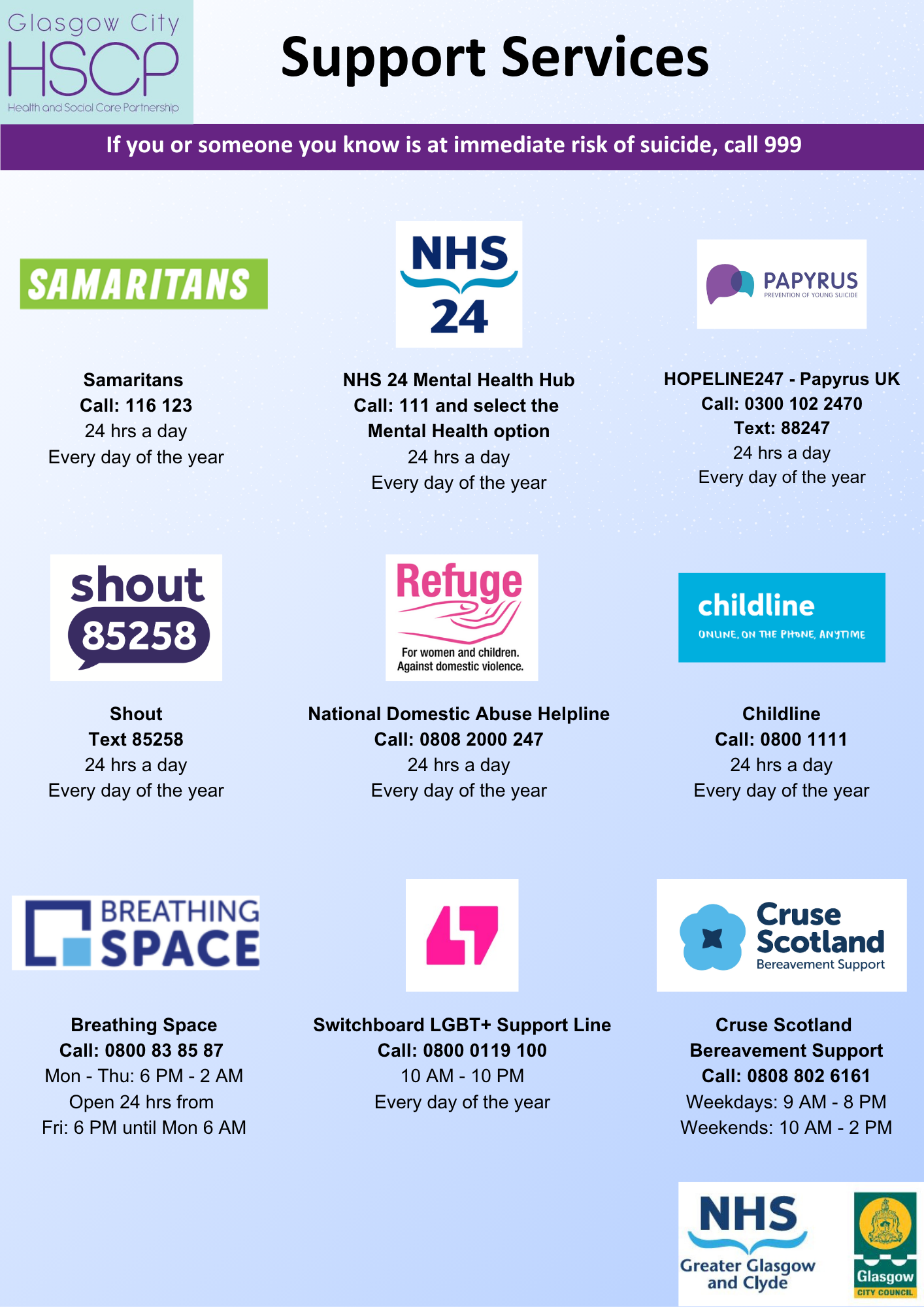
Mental Health Support Services Poster – This poster contains details of a range of mental health supports that are available across Glasgow City.
Gender Based Violence Resources: Glasgow City Health Improvement have developed a range of Gender Based Violence resources for School and Youth/Community setting use.
Screen Time Resource – Be Screen Smart: The Be Screen Smart resource aims to raise awareness of the benefits of reduced screen time.
Trauma Informed Toolkit: The toolkit aims to spark conversations on supporting children and young people in Glasgow affected by childhood adversity and trauma. It promotes trauma-informed practice across organisations and offers background on ACEs, trauma, and resilience, along with local resources and supports.
Which Way Multiple Risk Curricular Resources: Which Way has been designed to encourage learners to discuss and think more carefully about risk, risk taking behaviours and the decisions they make around them. Activities should encourage discussion, peer support and critical thinking.
Services
The following health improvement services are delivered across Glasgow City:
Glasgow City Youth Health Service offers confidential, personalised support for young people aged 12-19 years in Glasgow City.
Sandyford runs dedicated clinics for 13 – 17-year-olds, offering support on sexual health, contraception and STI prevention.
Quit Your Way stop smoking services offer free information, advice and support, including nicotine replacement therapy, to those who want to stop smoking.
In addition you can access Useful Contacts via The Glasgow City Health and Wellbeing Website, which contains links to a range of services and services directories in Glasgow City.
Training Calendar
The Glasgow City Health Improvement Training Calendar offers online and face to face training on a variety of health priorities and themes. Courses and online learning are facilitated by Glasgow City Heath Improvement or provided by external organisations and are free of charge, offered on a first come first served basis. These courses are aimed at practitioners supporting people and communities across the life span in Glasgow City.
Annual Report
The Glasgow City Child and Youth Health Improvement 2024/25 Annual Report is a key document that highlights the extensive efforts of our team. It offers a thorough overview of our ongoing dedication to Health Improvement principles and highlights where we are working together to build a healthier, more equitable future for Glasgow’s children, young people, and families.
The Glasgow City Health Improvement Annual Report 2024/25 details key developments and accomplishments over the year, demonstrating how our wider Health Improvement team has continued to advance health and wellbeing, address health inequalities and enhance support for individuals and communities across the city.
Partnership work
You can find information on Locality Youth Network Meetings and Mental Health and Suicide Prevention Networks via the Glasgow City Health and Wellbeing Website.
Some examples of partnership work developed through our various networks can be found below.
A community health walk and wellbeing event in was held in Pollok during Mental Health Awareness Week 2025. It centred on the theme of community, connection and support and aimed to bring together local community members and staff to promote mental health and wellbeing through shared activity and connection. Click here to read the report.
Time to Talk Day is the UK’s biggest mental health conversation, aimed at breaking stigma and encouraging open dialogue. This year in North East Glasgow, Health Improvement staff supported local conversations through small grants, enabling 20 community groups to host inclusive wellbeing events. To share these powerful stories, East End Community Radio produced Let’s Talk—a six-episode podcast series highlighting the impact across the community.
Episode 1: Chloe introduces the podcast and explains how Health Improvement supports mental wellbeing in the community. Stuart then chats with our first guest, Barbara, who shares her experience working in mental health across Glasgow. She highlights key local services and offers a simple, helpful tip for staying mentally well.
Episode 2: Kerry introduces the East Centre, Calton & Dennistoun Hubcap and shares how they marked Time to Talk Day with a wellbeing activity focused on staff mental health. She reflects on what participants enjoyed, why it mattered, and offers a practical tip for supporting positive mental health. We also hear from five local organisations — BCLC, Bluevale, Cranhill Development Trust, Calvay Centre, and Whiterose — as they share how they got involved, the impact of their activities, and how they continue to promote mental wellbeing in their communities.
Episode 3: Claire introduces her North East Hubcap and shares how they supported staff wellbeing through a Time to Talk activity, reflecting on what made it meaningful and offering a practical mental health tip. This episode also features voices from Easterhouse Baptist Church, Easterhouse Sports Centre, Denmilne Community Action Group, The Glenburn, and Pavilion, as they discuss their Time to Talk Day events, the impact on their communities, and how they continue to champion mental wellbeing in their everyday work.
Episode 4: Christine introduces the Springburn and Robroyston Hubcap and shares how their Time to Talk activity supported staff wellbeing, highlighting what made it meaningful and offering a practical mental health tip. This episode also features BCDC, North East Recovery Café (NERC), Royston Youth Action, and Beatroute Arts, as they reflect on their Time to Talk Day events, the impact on their communities, and how they continue to promote open conversations around mental health. While not featured in the episode, Brunswick also took part in the initiative.
Episode 5: Siobhan introduces the Shettleston and Baillieston Hubcap and shares how their Time to Talk activity supported staff wellbeing, highlighting what participants enjoyed and offering a practical tip for positive mental health. This episode also features With Kids, Halliday Foundation, St Paul’s Community Hub, Fuse, and Shettleston Growing, as they reflect on their Time to Talk Day events, the impact on their communities, and how they continue to encourage open conversations around mental health.
Episode 6: Ann and Michelle reflect on the importance of mental health conversations and the resources available to support communities in North East Glasgow. Ann shares insights from her role, including the delivery of Scottish Mental Health First Aid (SMHFA) training, while Michelle highlights key resources from the Mental Health Board Team available on the NHS GGC website (Mental Health Improvement – NHSGGC). Both offer practical tips for maintaining positive mental wellbeing. Stuart closes the series by thanking listeners and celebrating the breadth of work delivered across the North East for Time to Talk.
We extend our sincere thanks to all the organisations, partners, and community members who generously shared their time, voices, and expertise during the Time to Talk Week of Action and podcast series. Your valued collaboration is deeply appreciated and plays a vital role in bringing important mental health conversations to life.
Thank you to: East End Community Radio, Cranhill Development Trust, Beatroute Arts, North East Recovery Community, Whiterose Community Hall, Bridgeton Community Learning Campus, Calvay Housing Association Ltd, St Paul’s Community Hub – Shettleston, Easterhouse Sports Centre, Easterhouse Baptist Church, Denmilne Community Hub & Garden, Fuse, Shettleston Community Growing Project, With Kids, The Halliday Foundation, Bluevale Community Club, The Pavillion, Royston Youth Action, BCDC, The Glenburn Centre, Brunswick Community Development Trust
Your Voice ran from 2019 to 2025 and was delivered by the North West Youth Network across North West Glasgow. It worked with over 30 partner organisations and involved hundreds of young people across six events.
Young people shared what matters most to them, including mental health, feeling safe, poverty, substance use, vaping, and the need for safe places and positive activities. Each event offered fun activities like sport and creative sessions, alongside chances to speak directly with services and decision makers. What young people said was listened to and used to shape future events.
In 2025, the programme introduced a youth‑led grant fund, giving young people real power to decide how money was spent. Over £6,400 was awarded to local projects chosen by young people themselves, showing the programme’s commitment to youth voice and community wellbeing.
For more information on Your Voice or the North West Youth Network, you can contact us via ggc.northwest.youthhealth@nhs.scot
Contact the team
For enquiries related to the Education HWB Website or to contact the Glasgow City Health Improvement team, please contact: ggc.educationhwb@nhs.scot
To reach out to your Locality Health Improvement Team (Child and Youth), please contact:
North-East Team – ggc.northeast.youthhealth@nhs.scot
North-West Team – ggc.northwest.youthhealth@nhs.scot
South Team – ggc.southyouthhi@nhs.scot